
Modern data centers rely on continuous cooling to keep servers, networking equipment, and critical infrastructure operating at peak performance. Even a small reduction in cooling efficiency can increase energy costs, reduce equipment lifespan, and create the risk of costly downtime. Because chillers are among the most important components of a data center’s cooling system, regular inspections play a vital role in maintaining reliability and efficiency.
At Eddy Current, we provide advanced inspection solutions that help facility managers evaluate chiller performance before minor issues become major failures. Through professional Eddy Current Chiller Inspection services, organizations can identify tube defects, detect corrosion, and make informed maintenance decisions that extend equipment life.
Why Chiller Inspections Matter in Data Centers
Unlike traditional commercial buildings, data centers operate around the clock with little room for interruption. Cooling equipment must consistently maintain optimal temperatures regardless of seasonal demand or workload fluctuations.
Over time, chiller tubes may develop corrosion, scaling, pitting, erosion, or small cracks. These issues reduce heat transfer efficiency and increase the workload on the cooling system. If left undetected, damaged tubes can eventually leak, resulting in expensive repairs and unplanned outages.
Routine Data Center Chiller Inspection programs allow facility teams to detect developing problems early. Rather than waiting for equipment failure, inspections provide valuable information that supports proactive maintenance scheduling and minimizes operational risks.
The Role of Eddy Current Tubing Inspection
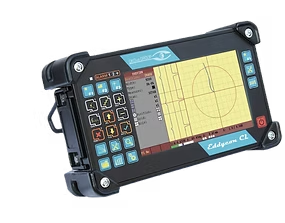
One of the most effective non-destructive testing methods for evaluating heat exchanger tubes is Eddy Current Tubing Inspection. This technology uses electromagnetic fields to identify discontinuities within conductive tubing without damaging the equipment.
The inspection process quickly detects:
- Internal corrosion
- External corrosion
- Tube wall thinning
- Pitting
- Cracks
- Erosion
- Mechanical wear
- Manufacturing defects
Because the testing is non-invasive, maintenance teams receive accurate information without dismantling large sections of the chiller system. This significantly reduces inspection time while improving maintenance planning.
Best Practices for Eddy Current Chiller Inspection
Implementing a structured inspection program helps maximize both equipment performance and maintenance budgets.
Schedule Routine Inspections
Waiting until cooling performance declines often means damage has already progressed. Establishing regular Eddy Current Chiller Inspection intervals allows facility managers to monitor equipment condition over time and identify degradation before failures occur.
Inspection frequency should be based on operating hours, water quality, equipment age, and manufacturer recommendations.
Inspect All Critical Heat Exchanger Tubes
Partial inspections may overlook localized damage. Comprehensive Eddy Current Tubing Inspection evaluates every critical tube, ensuring hidden defects are identified before they spread throughout the heat exchanger.
A complete inspection provides a more accurate understanding of overall equipment health.
Use Experienced Inspection Specialists
Advanced testing equipment produces valuable data only when operated by trained professionals. Experienced technicians understand how to interpret inspection signals and distinguish between harmless indications and defects requiring immediate attention.
Working with qualified specialists helps ensure maintenance decisions are based on reliable inspection results.
Compare Historical Inspection Results
One inspection provides a snapshot of equipment condition, but comparing multiple inspections over time reveals deterioration trends.
Historical records allow maintenance teams to determine whether defects are stable or progressing, making it easier to prioritize repairs and budget for future maintenance.
Importance of Data Center Chiller Data Analysis
Collecting inspection information is only part of the process. Effective Data Center Chiller Data Analysis transforms raw inspection data into practical maintenance recommendations.
Advanced analysis helps identify:
- Tubes approaching failure
- Areas experiencing accelerated corrosion
- Heat exchanger performance trends
- Maintenance priorities
- Long-term equipment reliability
Rather than replacing components unnecessarily, facility managers can target only the areas requiring attention, reducing maintenance costs while maximizing system availability.
Reliable Data Center Chiller Data Analysis also supports capital planning by helping organizations determine whether repairs, retubing, or equipment replacement provides the best long-term value.
Benefits of Regular Data Center Chiller Inspections
Preventive maintenance supported by routine Data Center Chiller Inspections offers numerous operational advantages.
Improved cooling efficiency helps maintain consistent temperatures throughout the facility while reducing energy consumption. Early detection of tube defects minimizes emergency shutdowns and extends equipment service life. Maintenance teams can better schedule repairs during planned outages instead of responding to unexpected failures.
Regular inspections also improve budgeting because maintenance decisions are based on actual equipment condition instead of estimates or assumptions.
For mission-critical facilities, predictable maintenance is significantly less expensive than emergency equipment replacement.
Supporting Energy Efficiency
As energy costs continue to rise, efficient cooling systems become increasingly important. Fouled or damaged tubes force chillers to work harder, increasing electricity usage while reducing cooling capacity.
Routine Eddy Current Chiller Inspection identifies developing problems before they significantly affect efficiency. Combined with thorough cleaning and preventive maintenance, inspections help optimize heat transfer performance and reduce operating costs.
Even small improvements in chiller efficiency can generate substantial savings for large-scale data centers operating continuously throughout the year.
Choosing the Right Inspection Partner
Selecting an experienced inspection provider is just as important as choosing the right testing technology. Professional inspectors should combine advanced equipment with detailed reporting and practical maintenance recommendations.
At Eddy Current, our inspection specialists deliver comprehensive Eddy Current Tubing Inspection services designed specifically for mission-critical facilities. We perform accurate Data Center Chiller Inspection services using proven non-destructive testing methods that identify hidden tube defects while minimizing operational disruption.
Our detailed reporting includes comprehensive Data Center Chiller Data Analysis, allowing facility managers to make confident maintenance decisions based on accurate equipment condition assessments.
Conclusion
Reliable cooling systems are essential for maintaining uninterrupted data center operations. Preventive maintenance supported by professional Data Center Chiller Inspections helps organizations reduce unexpected downtime, improve energy efficiency, and extend equipment lifespan.
Through advanced Eddy Current Tubing Inspection, detailed Eddy Current Chiller Inspection, and comprehensive Data Center Chiller Data Analysis, facility managers gain the information needed to plan maintenance proactively rather than reacting to equipment failures.
Partnering with Eddy Current ensures your cooling infrastructure receives accurate inspections, detailed analysis, and actionable recommendations that support long-term operational reliability while protecting your critical data center assets.