
Non-destructive testing plays a vital role in ensuring the safety, reliability, and performance of industrial components. Among the many inspection methods available today, eddy current testing equipment has become one of the most effective solutions for detecting surface and near-surface defects in conductive materials. Industries such as aerospace, power generation, manufacturing, automotive, and oil and gas depend on accurate eddy current inspections to maintain quality standards while minimizing downtime.
Choosing the right inspection system is essential for achieving precise results and improving operational efficiency. At Eddy Current, we understand that different applications require different capabilities. Whether you need a basic inspection tool or a fully automated solution, knowing the key features to look for will help you make the right investment.
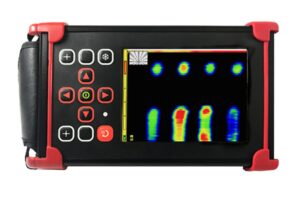
High Detection Accuracy
The primary purpose of eddy current testing equipment is to identify defects before they become costly failures. High-quality equipment should be capable of detecting extremely small surface cracks, corrosion, pitting, wall thinning, and material inconsistencies with exceptional precision.
Modern systems use advanced signal processing technology to reduce electrical noise and improve flaw detection accuracy. This enables inspectors to confidently evaluate critical components while reducing the chances of false indications.
When selecting inspection equipment, always prioritize systems that provide stable and repeatable results across various materials and inspection environments.
Reliable Eddy Current Flaw Detector Performance
An advanced eddy current flaw detector serves as the heart of any inspection system. Its ability to process inspection signals quickly and accurately directly impacts inspection quality.
Important capabilities include multiple operating frequencies, digital filtering, automatic balancing, phase rotation, adjustable gain, and high-resolution displays. These features allow inspectors to identify even subtle material defects while adapting to different inspection requirements.
A dependable eddy current flaw detector should also support multiple probe types, making it suitable for inspecting tubes, welds, fastener holes, aircraft components, and heat exchanger systems.
Portable Design for Field Inspections
Many inspections take place in challenging industrial environments where mobility is essential. A portable eddy current instrument offers flexibility for technicians performing inspections at manufacturing facilities, power plants, refineries, pipelines, and remote job sites.
Portable units should be lightweight, durable, and easy to operate. Features such as rechargeable batteries, touchscreen interfaces, weather-resistant construction, and ergonomic designs improve productivity during long inspection shifts.
A quality portable eddy current instrument enables inspectors to perform accurate testing without transporting components to a laboratory, reducing downtime and lowering inspection costs.
Advanced Eddy Current Testing Software
Hardware is only one part of an effective inspection solution. Modern eddy current testing software plays an equally important role in data analysis, reporting, and inspection management.
Comprehensive software solutions allow technicians to collect inspection data in real time, analyze signals, compare previous inspections, generate customized reports, and store inspection history for future reference.
The best eddy current testing software also supports graphical displays, C-scan imaging, automated defect recognition, cloud storage integration, and compatibility with various inspection probes.
Easy-to-use software reduces operator training time while helping organizations maintain consistent inspection standards across multiple facilities.
Automation for Increased Productivity
Industrial manufacturers continue to increase production speeds while maintaining strict quality standards. This has made Eddy Current Automation one of the fastest-growing areas within non-destructive testing.
Automated inspection systems integrate eddy current technology with robotic handling equipment, conveyors, and production lines to inspect large volumes of parts without interrupting manufacturing operations.
Eddy Current Automation offers several important benefits, including consistent inspection quality, reduced human error, faster inspection cycles, improved traceability, and lower labor costs.
For high-volume production environments, automation significantly improves efficiency while ensuring every component meets quality requirements before shipment.
User-Friendly Interface
Inspection equipment should simplify the testing process rather than complicate it. Modern eddy current testing equipment should feature intuitive software, touchscreen controls, customizable inspection presets, and straightforward menu navigation.
Easy operation allows technicians to complete inspections more efficiently while reducing the possibility of setup errors.
Training requirements are also reduced when systems provide guided calibration procedures, automatic probe recognition, and built-in inspection templates.
Data Storage and Reporting Capabilities
Industries operating under strict quality standards often require detailed inspection records for audits, compliance, and maintenance planning.
Today’s eddy current testing equipment should include sufficient internal memory, USB connectivity, wireless data transfer, and cloud integration for secure record management.
Comprehensive reporting features enable inspectors to generate professional inspection documentation quickly, helping organizations improve traceability and regulatory compliance.
Flexible Probe Compatibility
Different inspection applications require specialized probes. A versatile inspection system should support a wide variety of probe configurations for different component geometries and inspection objectives.
Whether inspecting aircraft structures, turbine blades, fastener holes, heat exchanger tubing, or precision-machined components, flexible probe compatibility ensures your inspection equipment remains useful across multiple projects.
An adaptable eddy current flaw detector combined with appropriate probes allows companies to expand inspection capabilities without replacing their entire system.
Long-Term Reliability and Technical Support
Investing in eddy current testing equipment is a long-term decision. Reliable manufacturers provide ongoing technical support, software updates, calibration services, operator training, and equipment maintenance.
Partnering with an experienced provider like Eddy Current ensures your inspection systems continue delivering dependable performance throughout their service life.
As technology evolves, regular software enhancements and expert support help organizations maximize the value of their inspection investment.
Conclusion
Selecting the right eddy current testing equipment requires careful consideration of inspection accuracy, portability, software capabilities, automation, ease of use, and long-term reliability. A high-performance eddy current flaw detector, dependable portable eddy current instrument, advanced eddy current testing software, and scalable Eddy Current Automation solutions can significantly improve inspection quality while increasing operational efficiency.
At Eddy Current, we are committed to delivering innovative inspection technologies that help industries maintain safety, improve productivity, and protect valuable assets. By investing in the right equipment today, organizations can achieve more reliable inspections, reduce maintenance costs, and support long-term operational success.