
Industrial equipment inspection plays a critical role in maintaining safety, reliability, and operational efficiency across industries such as power generation, aerospace, manufacturing, oil and gas, and petrochemicals. One of the most trusted non-destructive testing methods used today is eddy current testing, which helps identify flaws, corrosion, and material defects without damaging the component being inspected.
At Eddy Current, advanced inspection solutions are designed to help industries detect issues early, reduce downtime, and maintain compliance with safety standards. From tubing inspections to surface crack analysis, modern eddy current inspection techniques provide fast and accurate results for a wide range of applications.
What Is Eddy Current Testing?
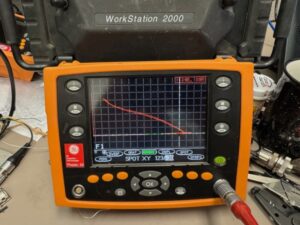
Eddy current testing is a non-destructive testing (NDT) method that uses electromagnetic induction to identify flaws in conductive materials. During the inspection process, an alternating current flows through a probe coil, creating a magnetic field. When the probe approaches a conductive material, circulating electrical currents known as eddy currents are generated inside the material.
Any discontinuity such as cracks, corrosion, wall thinning, or material changes disrupts the flow of these currents. The testing equipment detects these disruptions and converts them into readable signals for analysis.
This inspection method is widely used because it offers:
- Fast inspection speeds
- Accurate defect detection
- Minimal surface preparation
- No damage to the test component
- Reliable results for conductive materials
Because of these advantages, eddy current inspection has become an essential tool for preventive maintenance programs and quality assurance operations.
Benefits of Eddy Current Inspection
Modern industries rely heavily on eddy current inspection because it can detect both surface and near-surface defects with exceptional precision. The process is highly effective for inspecting tubes, welds, aircraft components, heat exchangers, and metal structures.
Some of the key benefits include:
High Sensitivity to Cracks and Corrosion
The technique can identify extremely small flaws before they grow into major structural problems. This early detection helps companies avoid unexpected failures and expensive repairs.
Fast and Efficient Testing
Unlike some traditional inspection methods, eddy current testing delivers immediate results. Technicians can inspect large areas quickly, helping reduce operational downtime.
No Need for Component Damage
Since the process is completely non-destructive, inspected parts remain fully usable after testing. This is especially important for high-value industrial equipment.
Versatile Applications
Eddy current inspection can be used on various conductive materials including stainless steel, aluminum, copper, titanium, and other alloys commonly found in industrial environments.
Importance of Eddy Current Crack Detection
One of the most valuable applications of this technology is eddy current crack detection. Even small cracks in metal surfaces can eventually lead to catastrophic equipment failures if left undetected.
Industries such as aerospace, transportation, and energy production depend on reliable crack detection methods to ensure structural integrity and operational safety. Eddy current crack detection is especially useful for identifying:
- Surface-breaking cracks
- Fatigue damage
- Stress corrosion cracking
- Weld defects
- Material degradation
Because the method is highly sensitive, technicians can locate flaws at an early stage before they become visible to the naked eye. This proactive approach helps improve maintenance planning and reduce costly emergency shutdowns.
Eddy Current Heat Exchanger Testing in Industrial Facilities
Heat exchangers are critical components used in refineries, chemical plants, power stations, and HVAC systems. Over time, tubes inside heat exchangers may develop corrosion, pitting, cracking, or wall thinning due to harsh operating conditions.
This is where eddy current heat exchanger testing becomes essential.
The inspection process allows technicians to evaluate the condition of heat exchanger tubes without dismantling the entire system. Specialized probes travel through the tubes and identify defects with high accuracy.
Benefits of eddy current heat exchanger testing include:
- Detection of internal and external tube defects
- Reduced equipment downtime
- Improved maintenance scheduling
- Prevention of unexpected failures
- Extended equipment lifespan
Routine inspections help facility operators maintain system efficiency while avoiding major operational disruptions caused by tube leaks or equipment damage.
Understanding Eddy Current Array Testing
As industrial inspection technology continues to evolve, advanced methods such as Eddy current array testing are becoming increasingly popular.
Eddy current array testing uses multiple coils arranged in an array configuration, allowing inspectors to scan larger areas more efficiently compared to conventional single-coil probes. This technology provides enhanced coverage, improved imaging, and faster inspections.
Some advantages of Eddy current array testing include:
Increased Inspection Speed
Multiple coils inspect larger surfaces simultaneously, reducing testing time significantly.
Better Defect Visualization
The technology produces detailed imaging that helps inspectors accurately evaluate flaw size and location.
Improved Coverage
Complex geometries and large surfaces can be inspected more effectively with minimal missed areas.
Enhanced Data Collection
Digital recording and analysis improve reporting accuracy and long-term maintenance tracking.
Industries that require high-precision inspections often choose Eddy current array testing for critical assets where reliability and safety are top priorities.
Why Industries Choose Eddy Current
At Eddy Current, inspection services are designed to help businesses maintain safe and reliable operations through advanced non-destructive testing solutions. By combining experienced technicians with modern inspection technology, companies can identify potential issues before they lead to costly failures.
Whether the requirement involves eddy current crack detection, tubing analysis, or comprehensive eddy current heat exchanger testing, professional inspection services provide accurate results that support preventive maintenance and regulatory compliance.
As industries continue to prioritize safety, operational efficiency, and asset longevity, eddy current inspection remains one of the most effective testing methods available for detecting flaws in conductive materials.
Conclusion
Modern industrial systems require accurate and reliable inspection methods to maintain safety and performance. Eddy current testing offers a fast, non-destructive, and highly effective solution for detecting cracks, corrosion, and material defects across a wide range of applications.
From routine eddy current inspection procedures to advanced Eddy current array testing technologies, businesses can improve maintenance planning, reduce downtime, and extend equipment lifespan. Additionally, eddy current heat exchanger testing and eddy current crack detection help industries identify hidden problems before they become serious operational risks.